आदित्यः सूर्यः स्वादित्यः सूर्यः स्वाहःविभूतीनाम्
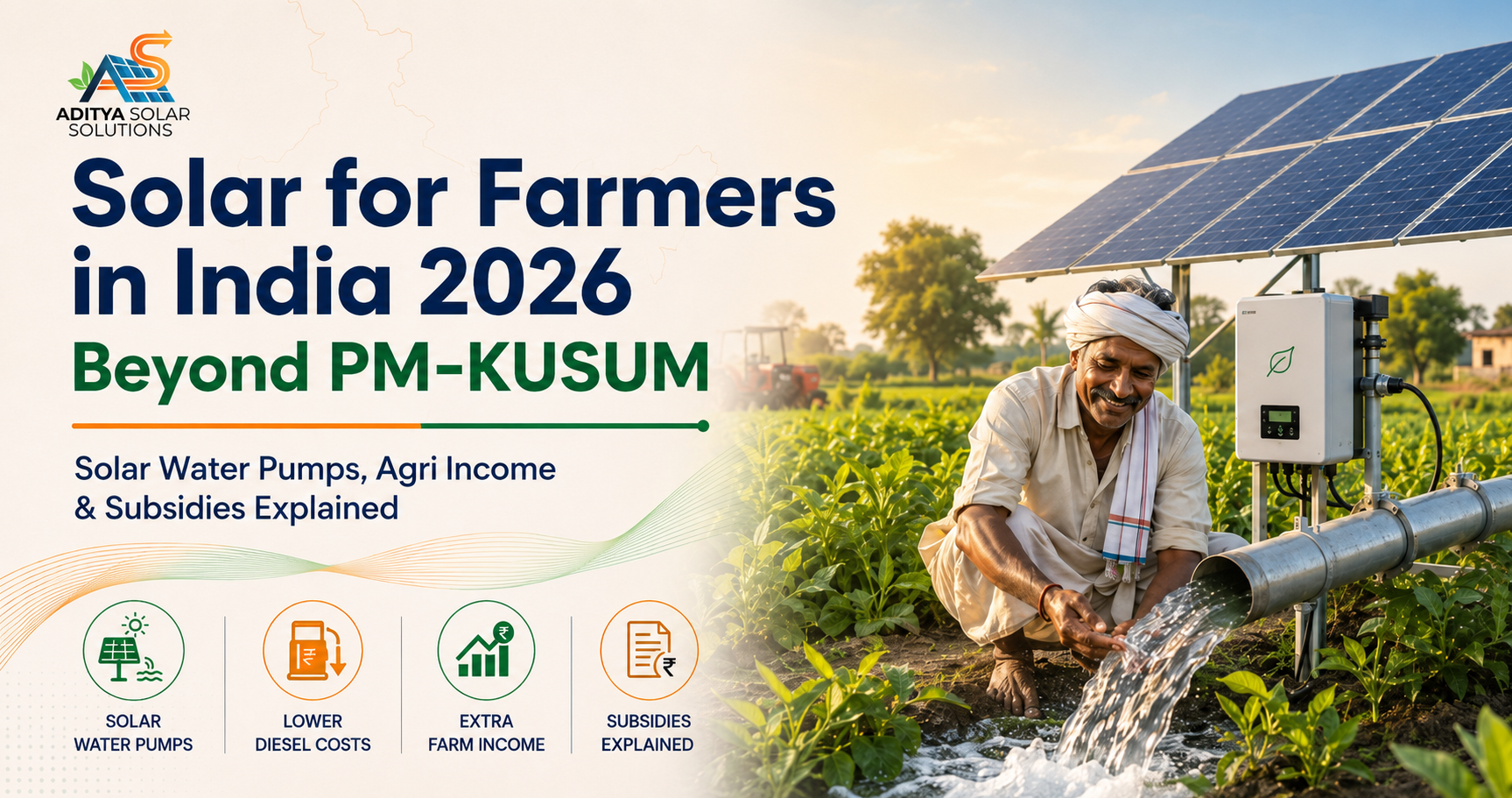
Why More Farmers in India Are Switching to Solar in 2026
Indian farmers have long relied on diesel pumps and the unpredictable electricity grid, which is on the brink of collapse, to regulate irrigation. Even in many villages in India, there is still power failure during farming, which adversely affects productivity and causes operational stress.
That’s why farmers in India are advancing rapidly toward solar power in 2026.
Nowadays, solar is not only a rooftop installation in cities. Today, farmers are employing solar water pumps and hybrid solar and agricultural solar to reduce their electric bills, improve irrigation reliability, and even generate extra income.
Even though schemes like PM-KUSUM solar pump 2026 have helped create awareness, there is a lack of understanding of the subsidy mechanisms, the systems suitable for them, and the profitability of investing in agri-solar.
The guide explains in simple language, from subsidies available in the Solar Pump in Andhra Pradesh to subsidies available in Agri Solar in Telangana, installation cost, savings and long-term benefits to farmers.
What is PM-KUSUM Solar Pump Scheme?
PM-KUSUM is one of the biggest renewable energy schemes in India aimed at helping farmers in their efforts to use solar power.
The overall objective of the scheme is straightforward – to decrease reliance on diesel and grid electricity by supporting farmers in the installation of solar powered irrigation systems.
Farmers can install under PM-KUSUM solar pump 2026:
- Standalone Solar Water Pumps
- Grid connected agricultural solar systems
- Solarized existing pumps
- Small scale solar power on farmland
Farmers can make solar installations more affordable thanks to subsidy support from the government, both at the central and state level.
Author

Aditya Solar is dedicated to delivering reliable solar solutions across India, helping businesses and homeowners reduce energy costs and move towards sustainable power.
